
Burnout Doesn't Announce Itself: Early Warning Signs
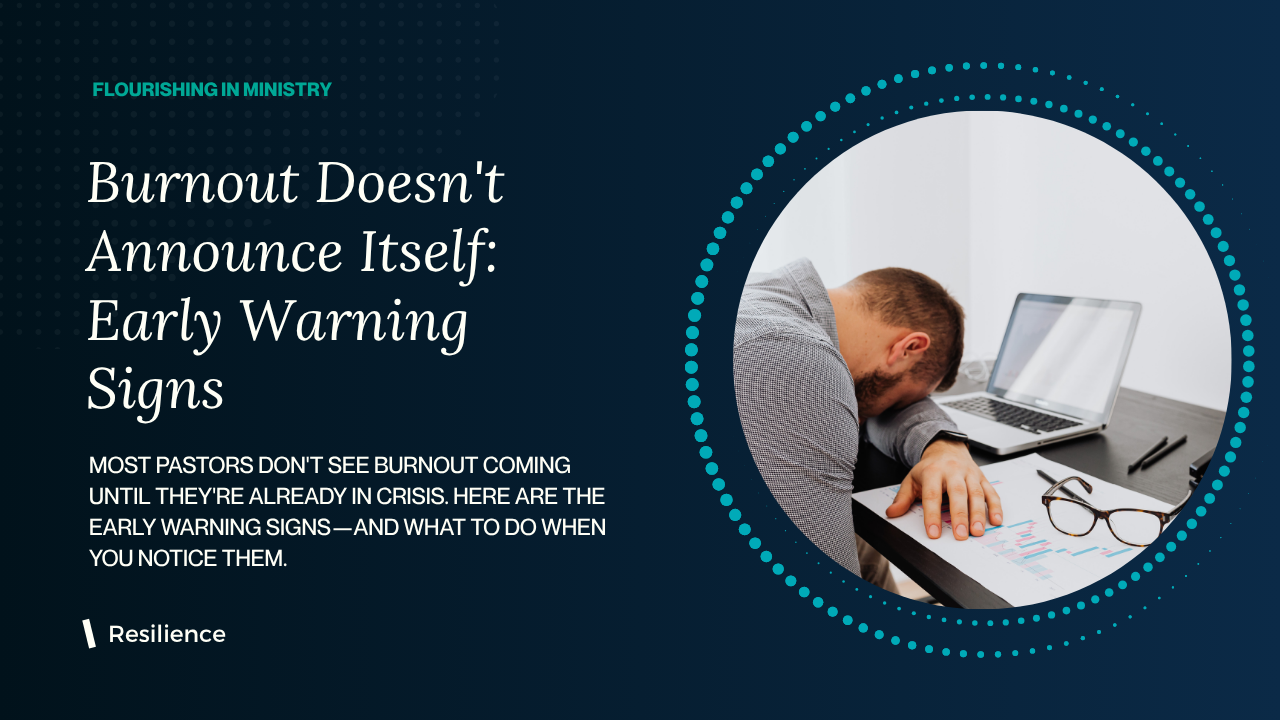
Burnout rarely arrives suddenly. It doesn't send a calendar invite or post a warning sign. Instead, it creeps—slowly, quietly, almost imperceptibly—until one day you realize you're not tired from ministry. You're done with it.
Research shows that most pastors who experience burnout didn't see it coming. They were too close to notice the gradual decline. They normalized symptoms that should have been alarms. They told themselves they were fine—until they weren't.
Learning to recognize early warning signs is essential for prevention. Because burnout is much easier to prevent than to recover from.
What Burnout Actually Is
Burnout isn't just being tired.
It's a clinical phenomenon characterized by three components:
- Emotional exhaustion - beyond normal fatigue—a depletion that rest doesn't fix. You feel emptied, wrung out, unable to give more even when you want to.
- Depersonalization - an emotional distancing from people you serve. People become problems rather than persons. You feel cynical about ministry. You go through the motions without genuine engagement.
- Reduced personal accomplishment - a sense that your work doesn't matter, that you're not effective, that it's all pointless. Even objective success doesn't register as meaningful.
When all three are present, you're in burnout—not just stress or tiredness.
Early Warning Signs to Watch For
Burnout develops gradually.
Here are signs it's developing—before you reach full crisis:
- Sleep changes. Difficulty falling asleep because your mind won't quiet. Waking at 3 AM with racing thoughts. Sleeping too much but never feeling rested. Sleep problems are often the first signal.
- Dread before work. Not occasional difficulty with hard tasks—persistent dread about regular ministry activities. Waking up already wishing the day was over. Relief on your day off that's disproportionate to joy in your work.
- Irritability increase. Shorter fuse than usual. Snapping at family. Less patience in meetings. Frustration that seems outsized relative to triggers. Emotional regulation becoming harder.
- Physical symptoms. Headaches becoming more frequent. Digestive issues. Muscle tension. Illness susceptibility. Your body often signals burnout before your mind acknowledges it.
- Withdrawal from relationships. Avoiding people. Canceling social plans. Preferring isolation. Declining connection even from people who support you.
- Loss of enjoyment. Things that used to bring joy becoming flat. Hobbies abandoned. Pleasures no longer pleasurable. An emotional grayness settling over life.
- Cynicism about ministry. Thoughts like 'What's the point?' or 'Nothing ever changes' or 'These people don't appreciate anything.' Creeping contempt for the work or people.
- Caring less about quality. Cutting corners you wouldn't have cut before. Sermon prep diminishing. Pastoral care becoming perfunctory. Not because you don't have time—because you don't have energy to care.
- Fantasy about escape. Daydreaming about quitting. Browsing other jobs. Imagining what life would be like outside ministry. Planning exit rather than engagement.
Why Warning Signs Get Missed
If these signs are detectable, why do pastors miss them?
- You compare yourself to other exhausted pastors and conclude your symptoms are normal. Everyone's tired, right? This comparison masks what should be alarming.
- Each day isn't that different from the day before. The slow creep doesn't register the way a sudden crisis would.
- You're too busy to reflect on your state. When you're running from task to task, you don't notice that you're running on empty.
- Admitting you're burning out can feel like admitting failure. You resist the diagnosis because it threatens your sense of competence.
- A distorted sense that suffering is virtuous can reframe burnout symptoms as badges of faithfulness rather than warning signs.
What to Do When You Notice Warning Signs
If you recognize these signs in yourself, don't wait:
Name it. Say out loud—at least to yourself—'I think I might be heading toward burnout.' Naming it removes denial's power.
Tell someone. A spouse, a friend, a peer, a counselor. Isolation accelerates burnout. Speaking breaks the pattern.
Assess honestly. Use a burnout inventory or our flourishing assessment. Get data about where you actually are, not where you think you should be.
Identify immediate changes. What can shift now? Not your whole life—but something. One boundary. One task delegated. One commitment declined.
Get professional support. A counselor, therapist, or coach can help you develop a recovery plan. Burnout usually requires more than self-help.
Make a longer plan. Early intervention might mean preventing full burnout. But it requires sustained change, not just a vacation. What structural changes would address the root causes?
Prevention Is Easier Than Recovery
Full burnout recovery often takes 1-3 years. Many pastors never return to ministry after severe burnout. Prevention is enormously easier than recovery.
That's why recognizing early warnings matters so much. The earlier you intervene, the less damage to undo.
What warning signs are present in your life right now? Not dramatic ones—subtle ones. The ones you've been explaining away or normalizing. Those deserve your attention.

Assess Your Wellbeing Now
Our free Flourishing Assessment helps you see where you are across all five dimensions. It's a diagnostic that can reveal warning signs before they become crises.
Sources:
- Maslach, C. & Leiter, M. P. Maslach Burnout Inventory research.
- Hartford Institute for Religion Research. (2023). Exploring the Pandemic Impact on Congregations. Clergy burnout and attrition data.
- Duke Clergy Health Initiative. Burnout warning signs research.
