
Thriving vs. Surviving: What's the Difference?
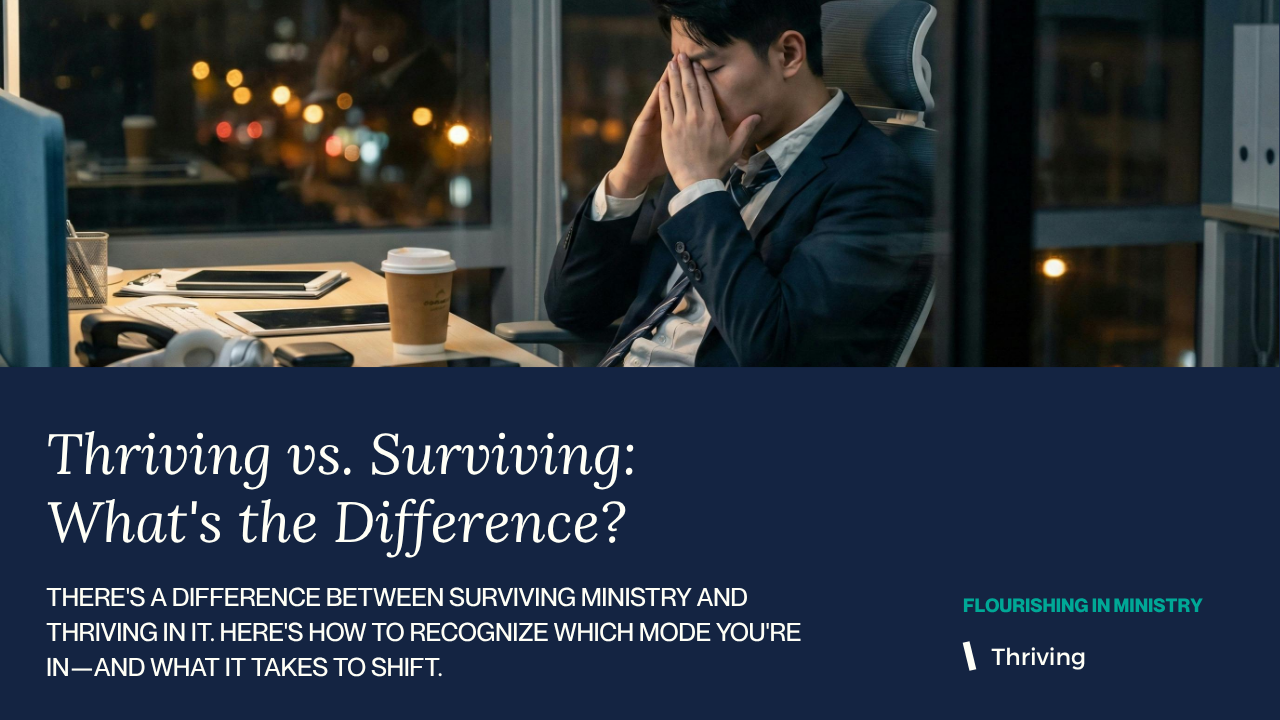
A pastor once described his ministry experience this way: 'I'm not drowning. But I'm not swimming either. I'm just... treading water. I can keep my head above the surface, but I'm not going anywhere. And I'm exhausted from the effort.'
This is the space between surviving and thriving—and it's where many ministry leaders find themselves. Not in crisis. Not failing. Just... enduring. Languishing. Getting through weeks rather than living them. Managing ministry rather than flourishing in it.
But the research on wellbeing tells us that humans weren't designed just to survive. We're designed to thrive. And understanding the difference between these two modes can help you recognize where you are—and what it might take to shift.
What Survival Mode Looks Like
Survival mode in ministry has recognizable markers:
Low energy. You get through what you must, but there's no extra. Discretionary tasks pile up. Creative projects stall. You're running on obligation, not energy.
Diminished joy. The things that once gave you pleasure in ministry now feel like tasks. You still do them—but the delight is gone.
Shrinking vision. Your horizon contracts to what's immediately in front of you. Long-term thinking feels impossible. You're managing today, not building tomorrow.
Reactive posture. You're responding to whatever comes at you rather than proactively creating. Ministry happens to you more than through you.
Minimal investment in self. Self-care feels like a luxury you can't afford. Development feels like adding weight to an already heavy load. You're conserving what little energy you have.
Survival mode isn't failure. It's a response to conditions that exceed your current capacity. And sometimes it's necessary—short-term survival mode during genuine crisis is appropriate.
The problem is when survival mode becomes your permanent address.
What Thriving Actually Means
Thriving isn't the absence of difficulty. Ministry will always involve challenge, conflict, and hard seasons. The research is clear: flourishing doesn't mean easy.
Instead, thriving is characterized by:
Energy that exceeds demands. Not always, but overall. You have reserves. You're not constantly depleted.
Genuine joy in the work. Not every moment—but regularly. You can identify what you love about ministry and you actually experience it.
Sense of meaningful contribution. Your work matters and you know it matters. You see impact, even if imperfect.
Growth orientation. You're developing, learning, becoming. Ministry is stretching you in ways that feel like expansion, not just strain.
Connected relationships. You're not isolated. You have people who know you, support you, and share the journey with you.
Alignment between calling and reality. What you do generally matches who you're called to be. There's coherence between your values and your daily work.
The Flourishing in Ministry research found that thriving isn't about external circumstances being perfect. It's about internal resources being sufficient—and about the quality of fit between who you are and what you're doing.
Why Survival Mode Persists
If thriving is possible, why do so many ministry leaders stay stuck in survival mode?
Several factors maintain the pattern:
Normalizing depletion. When everyone around you seems equally exhausted, survival mode feels normal. You don't realize it's not the only option.
Theology of suffering. A distorted view that all suffering is inherently virtuous can make survival mode feel spiritually superior to thriving. But Jesus promised abundant life, not merely endured life.
Fear of self-focus. Attending to your own flourishing can feel selfish when others need you. But depleted leaders have less to give. Your thriving isn't at the expense of others—it's for them.
Not knowing how. You might want to thrive but not know what would actually shift your experience. The path isn't always clear.
Structural barriers. Sometimes survival mode is maintained by systems, expectations, and structures that would need to change. Individual effort alone can't overcome systemic problems.
Making the Shift
Moving from surviving to thriving isn't usually a single dramatic change. It's more often a series of small shifts:
Name your current mode honestly. Without judgment, assess: Am I surviving or thriving? And in what areas? The answer might vary across different dimensions of your life.
Identify what's depleting. What specifically is draining your energy? Some depleting factors can be changed or eliminated. Others require different strategies.
Rediscover what gives life. When did you last feel truly energized by ministry? What were you doing? With whom? Understanding your thriving patterns helps you create more of them.
Make one small change. Not an overhaul—a single, sustainable shift that moves you in the direction of thriving. Small wins build momentum.
Get support. Moving from survival to thriving is rarely a solo journey. Coaches, peers, counselors, and communities can provide accountability, perspective, and encouragement.
Address structural issues. Some survival mode is maintained by expectations, roles, or systems that need to change. This might require difficult conversations or significant decisions.
Permission to Thrive
Here's what we want you to hear: thriving in ministry isn't selfish. It's not a betrayal of those you serve. It's not a luxury reserved for those with easier assignments.
Thriving is what you were designed for. And the ministry that flows from thriving is qualitatively different—more creative, more present, more sustainable, more life-giving to others.
You have permission to want more than survival. You have permission to seek flourishing. You have permission to believe that ministry can be—at least much of the time—deeply good.
Where are you on the spectrum between surviving and thriving? And what would it take to move—even a little—toward the thriving end?

Subscribe to the Weekly Well
Each week, a single practical insight for moving from surviving to thriving. Research-backed. Actionable. Written for ministry leaders who want to flourish.
