
The Congregation Relationship: The #1 Predictor of Flourishing
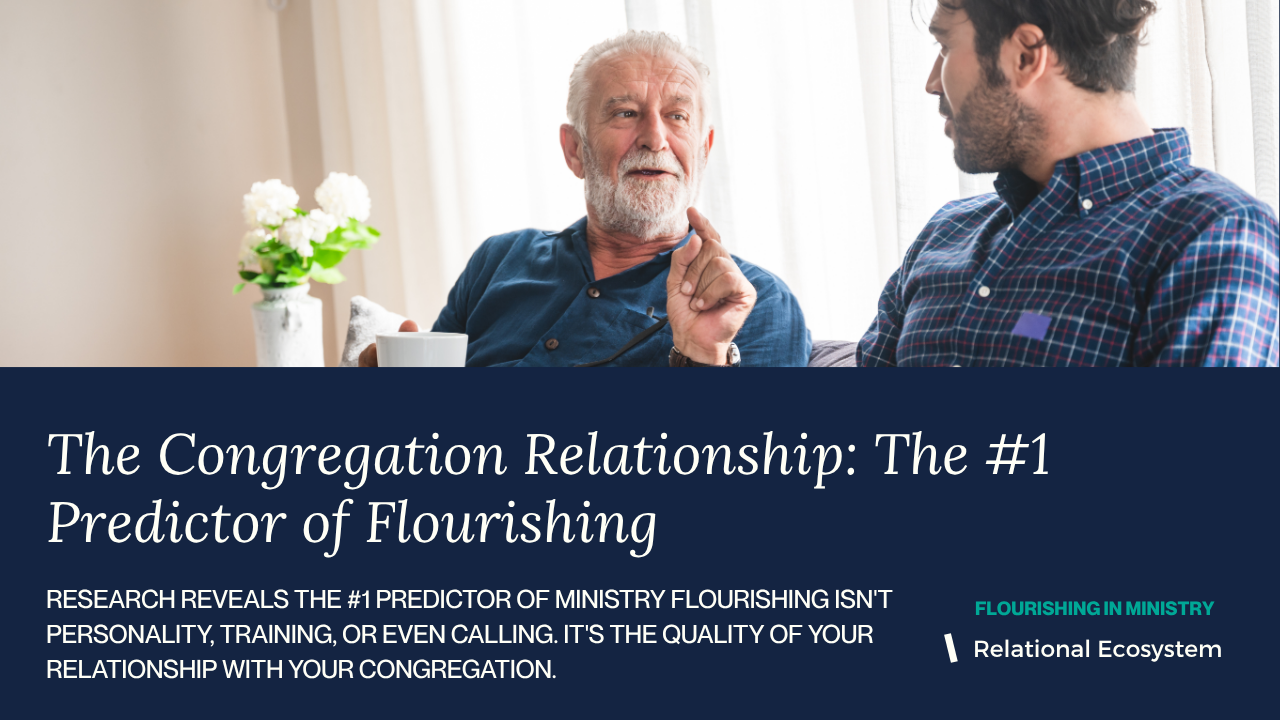
Of all the factors researchers have studied in relation to clergy wellbeing, one stands out above the rest: the quality of the relationship between pastor and congregation.
Not personality type. Not theological training. Not years of experience. Not prayer life or spiritual disciplines. Not even support from denominational structures.
The single strongest predictor of whether a pastor will flourish or burn out is whether they have a positive, mutually supportive relationship with their congregation.
This finding from the Flourishing in Ministry research has profound implications for how we think about ministry sustainability—and what to do when we're struggling.
What the Research Shows
The Notre Dame study followed over 20,000 ministry leaders across denominations. When researchers analyzed what distinguished flourishing pastors from struggling ones, congregational relationship emerged as the dominant factor.
Pastors who reported positive relationships with their congregations showed higher wellbeing across all five dimensions: daily wellbeing, resilience, thriving, authenticity, and relational ecosystem. They were significantly less likely to experience burnout, depression, and thoughts of leaving ministry.
Conversely, pastors with strained congregational relationships struggled—even when other factors were favorable. Good self-care, strong peer relationships, and personal spiritual practices couldn't fully compensate for a dysfunctional relationship with the community they served.
Why This Relationship Matters So Much
Several factors explain why the congregation relationship carries such weight:
Time exposure
You spend more time interacting with your congregation than with any other group. The sheer volume of contact means this relationship shapes daily experience more than any other.
Identity entanglement
Your role as pastor is defined in relation to this community. How they see you affects how you see yourself. Their affirmation or criticism lands differently than outsiders' opinions.
Vocational validation
Ministry is fundamentally about serving this community. If the relationship is broken, the vocation itself feels compromised. It's hard to feel called to a people you're in conflict with.
Practical sustainability
Your salary, your housing, your job security often depend on congregational support. Relational strain creates existential anxiety beyond the emotional cost.
Spiritual confusion
When people you're called to shepherd become sources of pain, it creates theological dissonance. How do you love people who are harming you? How do you lead people who won't follow?
What a Healthy Relationship Looks Like
Positive pastor-congregation relationships share certain characteristics:
- Mutual care. Care flows both directions. You care for them; they care for you. They notice when you're struggling. They celebrate your successes. They treat you as a person, not just a function.
- Realistic expectations. They don't expect you to be superhuman. They understand you have limits, needs, and a life outside church. They don't demand constant availability or punish you for setting boundaries.
- Trust. They give you the benefit of the doubt. They assume good intentions. They bring concerns to you directly rather than gossiping. They allow you to make mistakes without crucifying you.
- Partnership. They see themselves as partners in mission, not consumers of religious services. They own responsibility for the church's health rather than placing everything on your shoulders.
- Healthy conflict. Conflict exists—it's inevitable—but it's handled maturely. Disagreements don't become personal attacks. Resolution is pursued. Forgiveness is practiced.
When the Relationship Is Strained
If you're in a difficult congregational relationship, the research doesn't mean you're doomed. But it does mean this relationship deserves direct attention:
- Name it honestly. Don't spiritualize or minimize what's happening. If the relationship is unhealthy, acknowledge that—at least to yourself and a trusted advisor.
- Assess mutuality. Is care flowing both directions? Or are you giving and giving without receiving? If it's one-directional, that imbalance needs to be addressed.
- Seek understanding. What's underneath the strain? History before you arrived? Unrealistic expectations? Particular congregational dynamics? Conflict with specific individuals? Congregational family systems dynamics? Understanding helps you respond appropriately.
- Have direct conversations. Often congregational strain persists because no one names it. Speaking honestly—with appropriate individuals, in appropriate settings—can begin repair.
- Set boundaries. You may need to limit exposure to particularly toxic individuals or dynamics. Boundaries aren't abandonment—they're protection that enables sustained engagement.
- Get outside support. A coach, counselor, consultant or denominational resource can provide perspective and help you navigate difficult dynamics. You shouldn't try to solve this alone.
- Consider fit. Sometimes the relationship can't be repaired—the values are too different, the history too painful, the dynamics too entrenched. In those cases, staying may not be faithfulness; it may be self-destruction.
What You Can Influence
You can't control how your congregation relates to you. But you can influence it:
- Model vulnerability. When you share appropriately from your own struggles, you give permission for mutual care. Congregations often don't know you need care because you've never shown it.
- Express gratitude. Acknowledging what's good in the relationship strengthens it. Thank people. Celebrate partnerships. Name what's working.
- Develop lay leaders. When responsibility is shared, you're less likely to be scapegoated. Building leadership teams creates partners in carrying congregational burdens.
- Tend the relationship directly. Don't assume it will care for itself. Invest in knowing your people, understanding their concerns, building genuine connection.
The relationship with your congregation isn't everything—but it's the most important thing. If you're struggling in ministry, start by asking: How is this relationship? That's often where the most important work needs to happen.

Download the Flourishing in Ministry Guide
Our free guide walks through all five dimensions of flourishing—including how to build a healthy relational ecosystem with your congregation and beyond.
Sources:
- Bloom, M. Flourishing in Ministry research, Notre Dame.
- Bloom, M. (2019). Flourishing in Ministry: How to Cultivate Clergy Wellbeing. Rowman & Littlefield.
